Summer Safety Tips for Cats: What Every Birmingham Cat Owner Should Know
By Bluff Park Animal Clinic
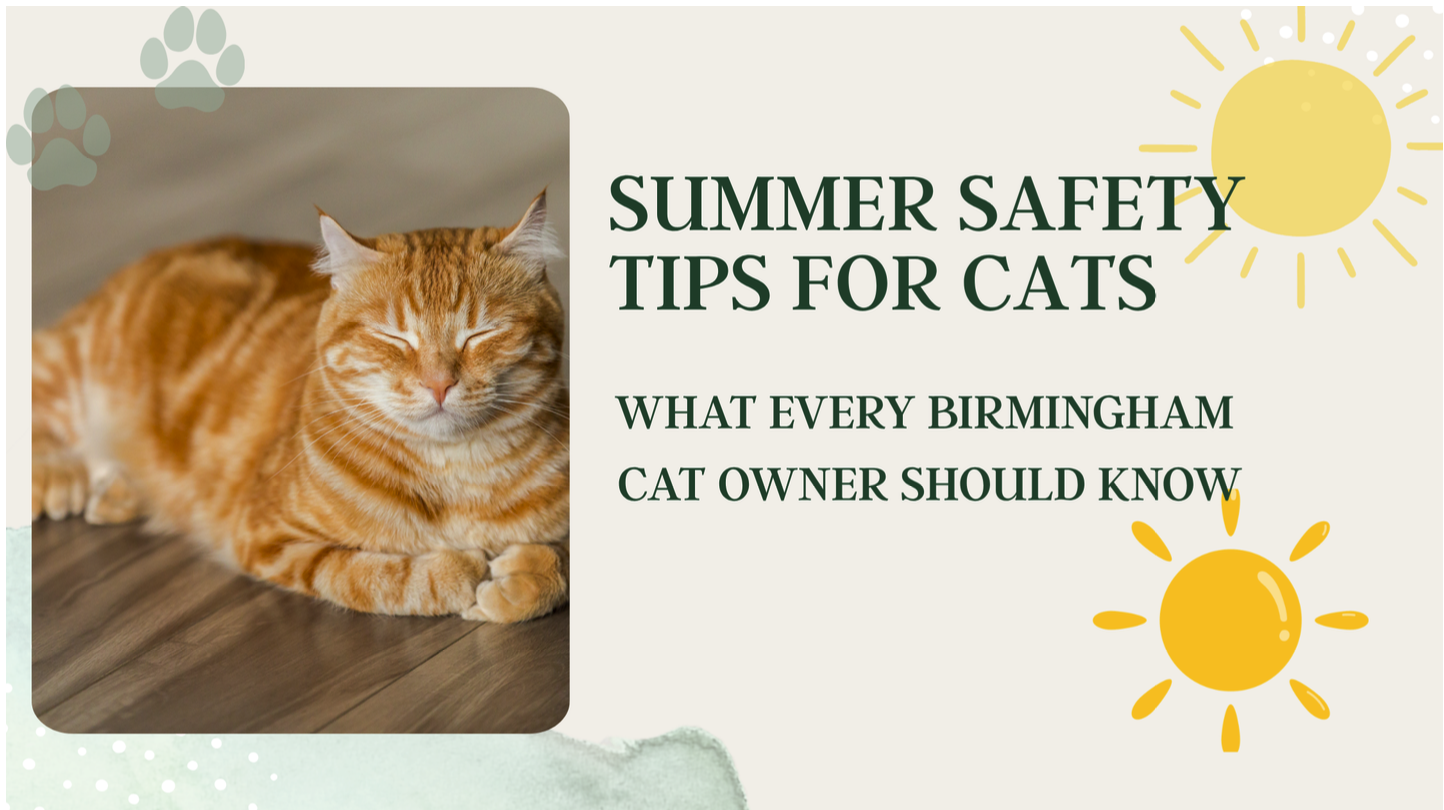
Summer brings real risks for cats — even indoor ones. Here are the seasonal safety tips every cat owner in Birmingham should know, from hydration to heat to parasite prevention.
Cats have a reputation for being self-sufficient, and they've earned it. Your average cat can sleep 16 hours, judge you silently for the remaining 8, and still somehow manage to seem busy with something important. They don't need much — or so they'd like you to think.
But summer has a way of exposing the gaps in even the most capable cat's self-care routine. Heat, humidity, parasites, and seasonal allergens don't care about your cat’s self-respect, and a few of these risks can escalate quietly before you notice anything is wrong. At Bluff Park Animal Clinic, we’ve compiled a list of things to watch for as the temperatures climb.
Hydration: The Sneaky Problem
Cats are notorious for under-drinking. In summer, this matters more. Dehydration can contribute to urinary tract issues, kidney problems, and heat- related illness.
A few things that actually help: try a running water fountain, since many cats prefer moving water; offer a second bowl in a different location (cats don't love drinking near their food); or add a small amount of water or low-sodium broth to wet food. If your cat is eating primarily dry food and you're concerned about hydration, it's worth asking us about it at the next exam.
Indoor Cats and Heat: Don't Assume They're Fine
Here's something people often overlook: indoor cats can overheat too. A house without AC — or with rooms that trap heat — can get dangerous quickly, especially for older cats, overweight cats, or flat-faced breeds like Persians and Himalayans who already have compromised respiratory systems.
Signs your home may be too warm for your cat include heavy or open-mouth panting (not normal in cats), lethargy beyond their usual impressive levels, drooling, or seeking out cold surfaces like tile floors. Make sure there's always a cool, well-ventilated room your cat can retreat to. Keep blinds or curtains drawn during peak heat hours, and never leave a cat in a closed car or sunroom.
If you notice signs of heat stroke — excessive panting, vomiting, confusion, or collapse — this is an emergency. Move your cat to a cool area, apply room- temperature (not ice cold) water to their paw pads and fur, and call us immediately.
Outdoor Cats: Summer-Specific Hazards
Outdoor cats navigate a lot on their own, but summer introduces some specific risks worth knowing:
Hot pavement. Asphalt can reach temperatures well above the air temperature on sunny days. If it's too hot for your bare feet, it's too hot for your cat's paws. Burns and blistering can happen faster than you'd expect.
Toxic plants. Summer gardens are full of plants that are harmful to cats — lilies (which are severely toxic and can cause kidney failure), azaleas, oleander, and certain mulches and fertilizers. If your cat has outdoor access, it's worth a quick audit of your yard.
Wildlife encounters. Snakes, fire ants, and other wildlife are more active in warmer months. Bites and stings can cause serious reactions, especially in smaller cats.
Cars and heat. Outdoor cats sometimes seek shade under parked vehicles or — dangerously — in engine compartments. This is worth a quick hood-knock before starting your car in warm weather.
Seasonal Allergies: Not Just a Dog Thing
Cats can absolutely develop seasonal allergies, and the symptoms don't always look like what you'd expect. Instead of sneezing (though that can happen), allergic cats often present with:
- Excessive grooming, licking, or scratching
- Hair loss, particularly around the face, belly, or base of the tail
- Skin irritation, redness, or small scabs (sometimes called "miliary dermatitis")
- Watery or irritated eyes
These symptoms overlap with a lot of other conditions — parasites, food sensitivities, skin infections — so it's worth getting a proper diagnosis rather than guessing. If you're seeing any of these signs, bring them up at your cat's next appointment.
Parasites: Fleas, Ticks, and Yes — Mosquitoes
Most cat owners know about fleas and ticks, but mosquitoes often fly under the radar. In Birmingham, where mosquito season is long and enthusiastic, this matters: mosquitoes can transmit heartworm disease to cats, and feline heartworm is harder to diagnose and has no approved treatment the way canine heartworm does. Prevention is genuinely the only good option.
Even strictly indoor cats aren't fully protected — mosquitoes get inside, and fleas hitch rides on clothing and shoes. Year-round parasite prevention is our general recommendation, but especially heading into summer, it's worth confirming your cat is current on whatever protocol you're using. If you're not sure what's right for your cat, we're happy to talk through the options.
Grooming: Does Your Cat Need Help in Summer?
Mostly, cats handle their own grooming — it's one of their better qualities. But
summer can create a few situations where they benefit from a little help.
Long-haired cats are prone to matting, which can trap heat and moisture
against the skin and cause irritation. Regular brushing (or a professional
groom) can prevent this. Some owners opt for a summer trim for long-haired
cats, which is a personal choice — cats don't actually need to be shaved, and
their coat provides some insulation, but a light trim can help with matting.
Shedding also increases in summer. Frequent brushing removes loose fur that
would otherwise be ingested during grooming, which reduces hairballs — a
benefit worth mentioning the next time your cat looks at you smugly while
depositing one on the floor.
Is Your Cat Due for a Summer Wellness Exam?
A lot of the issues above — hidden dehydration, early parasite infestations, allergy symptoms, weight that makes heat harder to tolerate — are things we can catch or address at a routine wellness visit before they become bigger problems.
If your cat hasn't been in recently, summer is a good time to check in. Contact us or book an appointment easily through our pet portal. We'll make sure your cat is set up for a safe, comfortable season — and they'll pretend they didn't need it, which is fine.