Back To School Blues
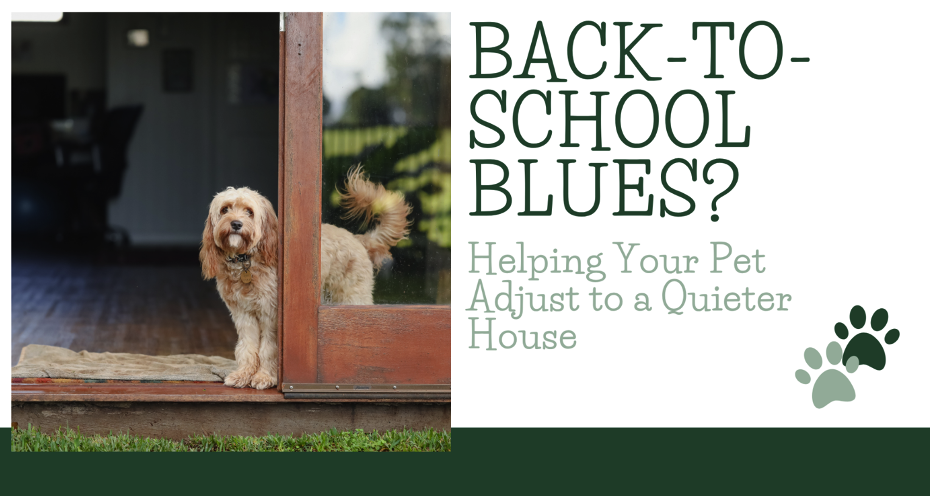
After a summer of constant company — kids underfoot, snacks dropped on the floor, someone always around for a belly rub — the sudden shift to a quiet house can genuinely throw pets off balance. This isn't just a cute seasonal metaphor. It's a real behavioral transition, and understanding what's actually happening in your pet's mind makes all the difference in helping them through it.
It's Not Just "Missing the Kids" — It's a Routine Earthquake
At Bluff Park Animal Clinic, we often see a noticeable uptick in appointments every August and September for dogs showing destructive behavior, excessive barking, or accidents in the house. The instinct is to chalk this up to pets simply being sad the kids are gone. But most veterinary behaviorists point to something more specific: it's the whiplash of routine change, not just the loneliness itself, that trips pets up.
Think about it from your pet's side of things. Wake-up times shift. Breakfast comes earlier. The morning walk gets rushed or skipped. The house goes from six sets of footsteps to zero, sometimes overnight. Dogs and cats build their sense of security around predictability, so when everything shifts at once, their nervous system reads it as instability — even if nothing is actually wrong.
That reframe matters, because it changes the fix. The goal isn't just "give your pet more attention" — it's rebuilding a predictable rhythm.
The Surprising Way Dogs Might "Feel" Time Passing
Here's a detail that tends to surprise people: dogs likely don't experience time the way we do — as a number on a clock — but there's a compelling theory that they track it partly through scent. Your smell is strongest the moment you walk out the door, then gradually fades throughout the day. Some researchers believe dogs use that fading scent trail almost like an hourglass, which may be part of why dogs seem to "know" when you're about to arrive home, positioning themselves by the door minutes before the car pulls in.
Interestingly, a well-known 2011 study found dogs greeted owners with noticeably more excitement after a two-hour absence than after just thirty minutes — but there was no real difference between two hours and four hours. In other words, your dog can tell the difference between "quick errand" and "gone a while," but past a certain point, long is just long. That's a small but useful thing to know: a longer school day doesn't necessarily mean escalating distress the whole time — the hardest part may be the adjustment window itself, not the hours ticking by.
Your Own Nerves Are Contagious
One of the more counterintuitive findings from animal behavior experts is that a dog's anxiety often mirrors its owner's. Veterinary behavior consultants describe it as a feedback loop: if you feel anxious or guilty walking out the door, your dog picks up on your tone, posture, and even scent changes — and their stress response rises to match yours. Some researchers have gone as far as documenting that cortisol levels between dogs and their owners rise and fall in tandem.
Practically speaking, this means the calmest thing you can do for an anxious pet is to make your own exits and entrances almost boring. Skip the long, emotional goodbye. Skip the exuberant "I'M HOME!!" greeting the second you walk in. A low-key departure and a low-key return teach your pet that this is a normal, safe part of the day — not an event worth panicking over.
A Quiet House Can Affect Sleep, Too
Here's a genuinely under-the-radar finding: recent research using non-invasive sleep monitoring found that dogs get measurably worse sleep — specifically less time in deep, restorative sleep — when their owner isn't present, compared to sleeping near them. It's a reminder that the effects of a suddenly emptier house aren't limited to daytime whining or chewed-up shoes. A pet's stress from a routine change can show up in ways you'd never notice just by watching their behavior — which is part of why consistency in their environment (a familiar bed, consistent nap spots, minimal disruption to their sleeping areas) is worth protecting during this transition.
Don't Forget the Cats
Separation-related stress gets talked about almost exclusively in terms of dogs, but cats experience it too — they just tend to show it differently, and more quietly. Instead of barking or destruction, watch for hiding more than usual, a drop in appetite, or a noticeable mood shift. Because cats are subtler communicators, these signs are easy to miss or write off as "she's just being a cat." If your usually food-motivated cat starts skipping meals right around the time the kids head back to school, that timing isn't a coincidence.
Boredom vs. Anxiety: They Look Similar but Aren't the Same
One helpful distinction from veterinary behavior specialists: a bored dog tends to chew things at random — furniture, trash, whatever's nearby. A dog with true separation anxiety tends to focus destruction near exit points: door frames, window sills, anywhere that represents a way back to their people. If you're seeing damage concentrated around doors and windows, that's a meaningful clue pointing toward anxiety rather than simple boredom, and it may call for a different approach than just "more toys."
Easing the Transition
A few strategies grounded in what actually works, rather than generic advice:
- Start the new routine before school does. If possible, shift wake-up times, feeding schedules, and walk times to match the school-year routine about one to two weeks early. A gradual shift is far easier on a pet's nervous system than an overnight change.
- Practice short absences on purpose. Leave for five or ten minutes at a time, return calmly, and gradually build up. This mirrors the desensitization approach many veterinary behaviorists use with anxious dogs.
- Keep comings and goings low-key. No dramatic goodbyes, no dramatic hellos.
- Give them a job while you're gone. Puzzle feeders and treat-dispensing toys turn empty hours into something mentally engaging rather than just empty.
- Create a retreat spot. A cozy bed, a quiet corner, or a cat tree by a window gives your pet somewhere to settle that feels like theirs.
- Watch for patterns, not just moments. One rough day probably isn't cause for concern. Chewing at exits, appetite changes, or accidents that persist for more than a week or two are worth a conversation with your veterinarian.
Most pets adjust within a couple of weeks once the new rhythm settles in. But if your dog or cat is still struggling — especially with signs like self-injury, panic at departures, or a real drop in appetite — it's worth reaching out to your veterinary team. Sometimes what looks like "just missing the kids" is a treatable form of anxiety, and early support tends to make a real difference.
Change is hard on everyone in the house, four legs included. A little patience, a predictable routine, and a few boring goodbyes go a long way toward turning those back-to-school blues into just another season your pet learns to settle into.
Noticing some acting out at home in Birmingham?
If your dog or cat's back-to-school adjustment seems like more than the usual blues, we're happy to help. Contact Bluff Park Animal Clinic or visit your pet portal to request an appointment — we'll help figure out what's going on and get your pet back to their happy, settled self.
Written by the team at Bluff Park Animal Clinic | Birmingham, Alabama | August, 14 2026