Navigating Halloween with Your Dog or Cat - A Survival Guide from Bluff Park Animal Clinic
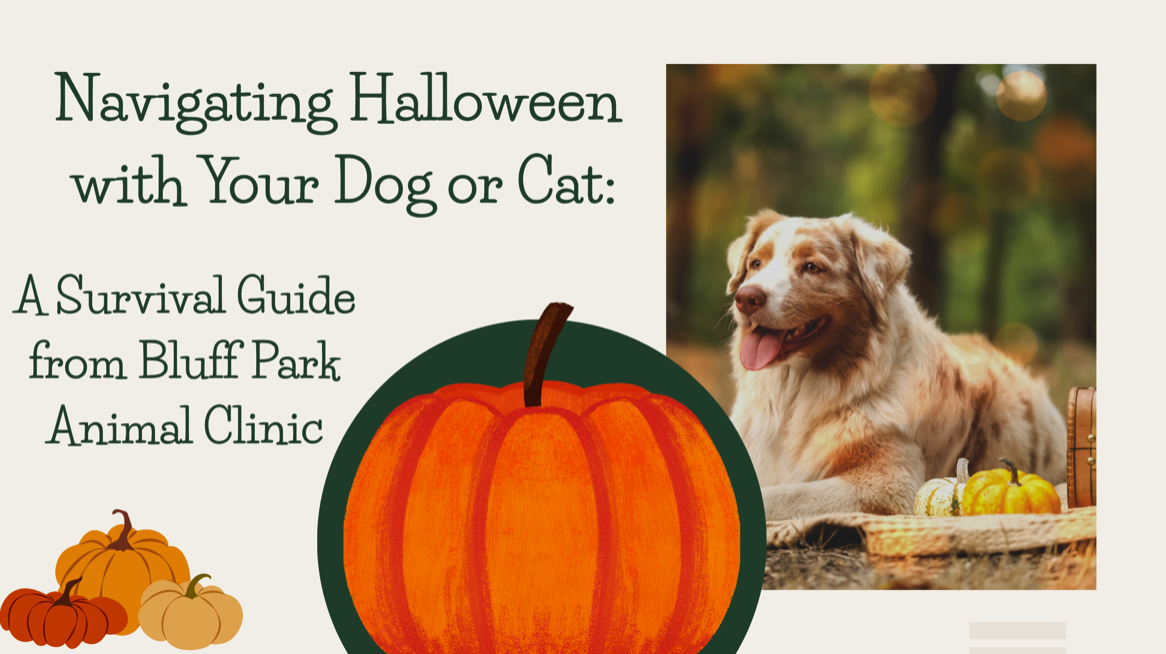
October in the Hoover and Birmingham area brings cooler evenings, neighborhood decorations, and the excitement of Halloween. For many of us, that means candy bowls, porch pumpkins, and kids in costumes ringing the doorbell. For our dogs and cats, it can also mean new smells, sounds, and temptations that aren’t always pet-friendly.
At Bluff Park Animal Clinic, we know that a little planning keeps the month fun for everyone. Here’s a practical guide to the most common Halloween-related pet risks we see—especially foods and decorations—plus a simple survival plan for trick-or-treat night.
Halloween Foods That Can Be Trouble
The candy bowl is usually the biggest magnet for curious pets. Many common treats are fine in tiny amounts for people but not for dogs or cats.
- Chocolate remains one of the most frequent causes of emergency visits around Halloween. Dark chocolate and baking chocolate are more concentrated than milk chocolate, but any significant amount can cause vomiting, restlessness, or worse.
- Xylitol (a sugar substitute found in some sugar-free gum, candies, peanut butters, and baked goods) is especially dangerous for dogs and can cause a rapid drop in blood sugar.
- Raisins and grapes (sometimes in trail mixes or baked goods) can be toxic to dogs.
- Onions, garlic, and other alliums sometimes hide in savory snacks or leftover meals.
- Caffeine and alcohol (coffee drinks, energy drinks, or leftover party beverages) are never safe.
Even “just a little” can add up if a dog finds an unattended bag or a cat knocks something off the counter. The simplest rule is to keep all candy and human snacks in closed containers well out of reach and to clean up wrappers promptly.
Decorations and Household Hazards
- Halloween décor creates a festive atmosphere, but some items become chew toys the moment a pet is left alone with them.
- Candles and open flames are an obvious risk for curious noses or wagging tails. Battery-operated candles or LED lights are safer alternatives.
- String lights, extension cords, and electrical cords can be chewed, leading to burns or shocks.
- Fake cobwebs, tinsel, and thin ribbons look interesting to cats and can cause intestinal blockages if swallowed.
- Pumpkins and jack-o’-lanterns are usually not toxic, but large amounts of raw pumpkin or seeds can cause stomach upset. A carved pumpkin left on the porch can also become a tempting (and messy) target for a determined dog.
- Glow sticks and light-up accessories contain chemicals that can irritate mouths and stomachs if bitten or chewed.
- Small batteries (from decorations or toys) are a serious concern if swallowed.
A quick walk-through of your living areas and porch before you leave the house can prevent most of these problems.
Halloween Night Survival Guide for Dogs and Cats
Many pets find the constant doorbell, strangers in costumes, and unusual noises stressful. A little preparation goes a long way.
Before the night begins
- Set up a quiet, comfortable space away from the front door with their bed, water, and a familiar toy or puzzle feeder.
- Make sure your dog or cat is wearing a current ID tag and is microchipped. Extra people in and out of the house increases the chance of a pet slipping outside.
- Stick to their normal feeding and walking schedule as much as possible so the evening feels routine.
During trick-or-treat hours
- Consider a short leash walk or extra play session earlier in the day so they are calmer when the doorbell starts ringing.
- If your dog gets overexcited or anxious, a well-fitted harness and leash near the door can help prevent bolting.
- Many cats prefer to stay in their quiet room entirely. Closing the door and turning on soft music or a white-noise app can help mask the sounds outside.
- Avoid costumes that restrict movement, breathing, or vision. If your pet enjoys dressing up, keep it simple, supervise them, and take it off as soon as the photos are done.
After the candy is gone
- Double-check floors and counters for dropped candy or wrappers.
- Give your pet their usual dinner and a calm wind-down routine. Most pets settle quickly once the activity outside stops.
A Few Extra Tips for the Whole Month
- Introduce any new decorations gradually so pets can investigate them while you’re watching.
- If you’re hosting a small gathering, set clear expectations with guests about not feeding pets from the table.
- For dogs who love being outside, a well-lit, securely fenced yard is still the safest place for short bathroom breaks during peak doorbell hours.
Halloween can be one of the most enjoyable times of year when pets are included thoughtfully. A few simple boundaries around food and décor, plus a quiet plan for the busiest night, usually keep everyone smiling.
If you have questions about anything your dog or cat got into, or if it’s time to schedule their next wellness visit, we’re here to help. Contact Bluff Park Animal Clinic at (205) 823-3034 or visit us at 2150 Tyler Rd in Hoover. We look forward to seeing you and your pets!
Written by the team at Bluff Park Animal Clinic | Birmingham, Alabama | October 16th, 2026